

Our Services
All the solutions you need to accelerate growth and drive business success.
All the solutions you need to accelerate growth and drive business success.
Sitecore Services
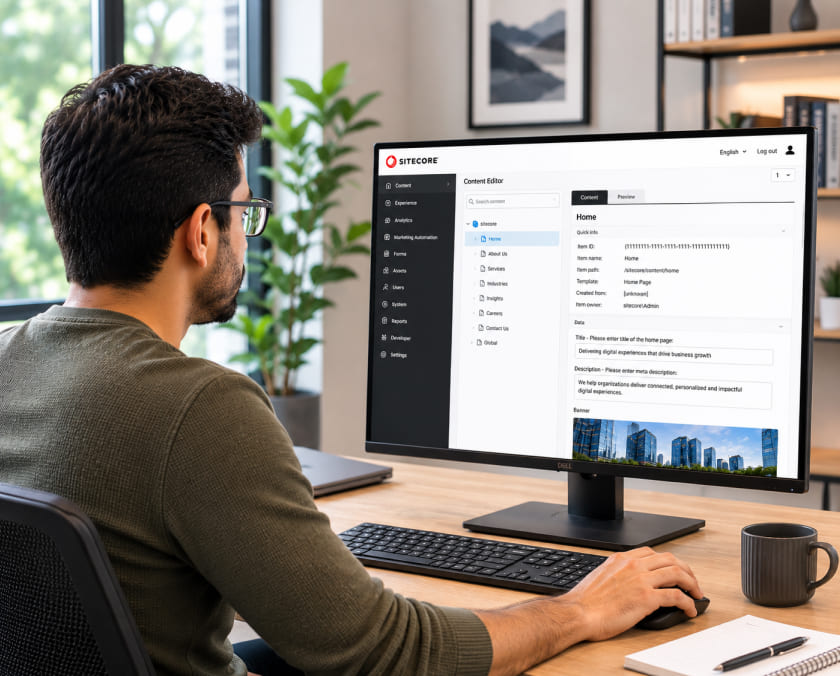
Sitecore is one of the most capable digital experience platforms available. Most organizations using it are running it at a fraction of that capability. The personalization was never configured. The analytics were connected but never acted on. The editorial team finds the content management workflow unworkable without developer involvement.
Sitecore is the platform enterprise and upper-tier organizations choose when they need to manage complex digital experiences across multiple channels, markets, and languages from a single content management system. The IT directors and digital experience managers who own these implementations know what Sitecore can do. What most implementations miss is the configuration layer that connects the platform's capability to the organization's actual content workflows and customer experience goals. Dotlogics builds that connection.


Of software features are rarely or never used.
Standish Group Research
Sitecore implementations that never configure personalization leave much of that sitting in the license, unused.
Sitecore's licensing cost is significant. Organizations expecting the platform to deliver on its own end up using a fraction of what they pay for. The gap shows up in three consistent patterns.
Dotlogics addresses both sides, technical implementation and personalization strategy.
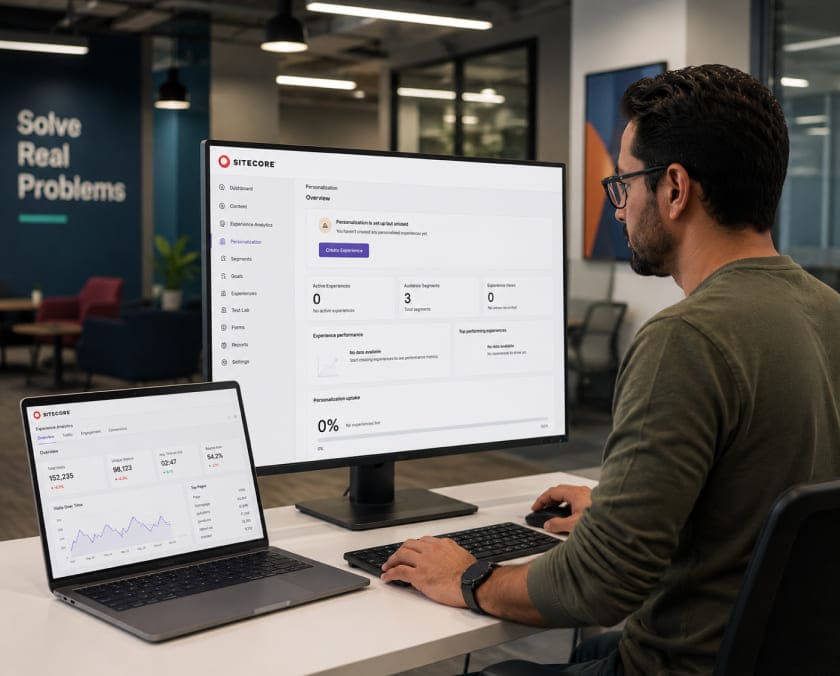
Every Sitecore engagement starts with understanding how the organization creates, manages, and publishes content before any platform configuration begins.
Full implementation of Sitecore's composable digital experience platform for organizations moving to the cloud-native architecture. Component-based content management configured around the organization's actual content structure, not the platform's default layout.
Auditing and improving existing Sitecore implementations that are not performing as expected. Underused personalization, slow page performance, or editorial workflows that require developer involvement for routine content updates.
Connecting Sitecore to the CRM, marketing automation, analytics, and commerce platforms in the organization's stack. Integration is what makes personalization based on real customer data possible.
Moving organizations from legacy CMS platforms to Sitecore. Content migration, redirect management, SEO and AI SEO preservation, and editorial team training on the configured system.
Sitecore has been transitioning its product line to a composable, cloud-native architecture. For organizations evaluating Sitecore today, the relevant distinction is between the traditional Sitecore XM or XP on-premise or managed cloud deployment and the newer Sitecore XM Cloud.
Sitecore XM Cloud is the current recommended direction for new Sitecore implementations. It separates content management from the front-end presentation layer, making it faster to update the site experience without changing the content management system. It is better suited for organizations that want the flexibility of a headless architecture.
Traditional Sitecore XM and XP are still in use across many organizations and receive ongoing support from Sitecore. Organizations on existing XM or XP deployments do not need to migrate immediately but should have a roadmap for the transition to the composable architecture. Dotlogics implements both and helps organizations on legacy Sitecore versions understand what a realistic transition looks like.
Results
Digital Experience
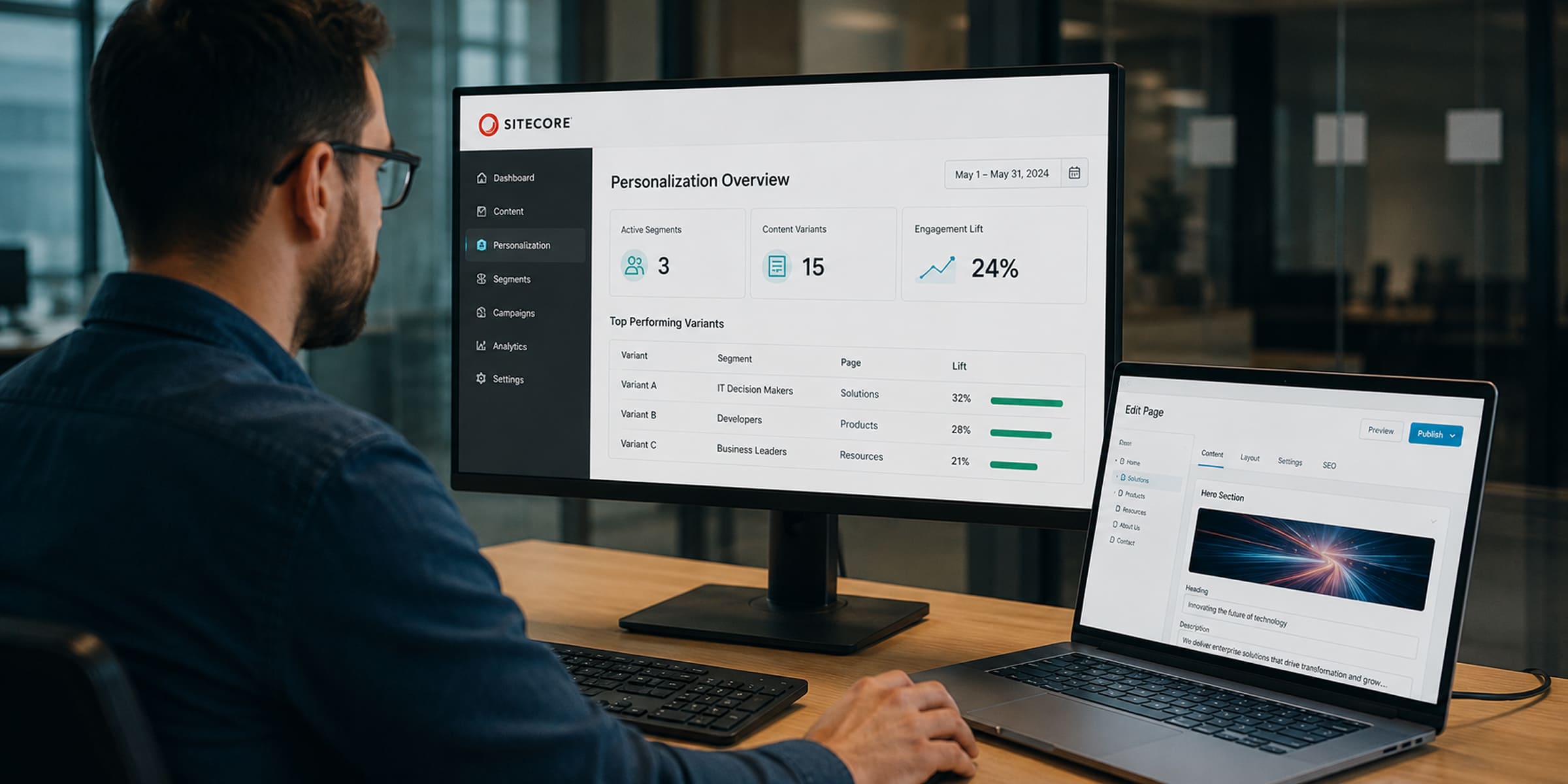
An enterprise technology organization had been live on Sitecore for 14 months with personalization still unconfigured and editorial team members requiring developer involvement for routine content updates. After an implementation audit and targeted optimization, personalization was configured against three audience segments with content variants across the five highest-traffic sections of the site. Editorial team independence from developers for routine content updates was achieved within 90 days of the engagement start.
Sitecore's licensing cost is significant and is not the right choice for every organization. It is justified when the organization manages complex content across multiple sites, markets, or languages; when personalization is a genuine business priority; or when the integration requirements with CRM and marketing automation demand a platform with Sitecore's API capabilities. Organizations that need a single-site CMS with straightforward content requirements are better served by a simpler platform at lower cost.
Start with an audit. Rebuilding a Sitecore implementation is expensive. Most underperforming Sitecore implementations have specific problems in the content architecture, the template structure, or the editorial workflow configuration that can be resolved without rebuilding the entire system. The audit identifies which approach is faster and less costly before any decision is made.
The decision depends on the organization's technical architecture preferences and the maturity of the digital experience program. Contentful and similar headless CMS platforms are simpler to implement and manage. Sitecore offers more built-in personalization, analytics, and marketing automation capabilities. Organizations with mature digital teams that will actively use personalization and integrated analytics get more value from Sitecore. Organizations that primarily need structured content management with a clean API get comparable results from simpler platforms at lower cost.
A Sitecore implementation typically costs between $100,000 and $500,000 depending on the scope, the number of sites managed, the level of personalization and integration required, and whether content migration from a legacy CMS is involved. Sitecore licensing is not publicly listed and is negotiated based on the number of sites, page views, and capabilities required.
Sitecore XM Cloud is the current cloud-native, composable version of the Sitecore platform that separates content management from front-end presentation. It allows the front-end experience to be updated independently of the CMS. New implementations are generally recommended to start with XM Cloud. Existing XM or XP deployments can continue operating and should plan a transition roadmap to the composable architecture. Whether XM Cloud is the right choice depends on the organization's technical architecture and development team capabilities.
Almost always an implementation problem. Sitecore implementations that are built around the platform's default content structure rather than how the editorial team actually creates content produce a system that is technically correct and editorially awkward. Rebuilding the content architecture and component library around the editorial workflow typically resolves this without a full platform reimplementation.
Yes. Sitecore connects to Salesforce, HubSpot, Microsoft Dynamics, and most major CRM platforms. The integration surfaces customer data in Sitecore so that content can be personalized based on actual customer attributes, behavior, and history rather than just anonymous visitor segments. This is one of the primary reasons organizations choose Sitecore over simpler CMS platforms.
Sitecore has strong built-in SEO and AI SEO capabilities including URL management, meta data control, canonical tags, and sitemap generation. For organizations migrating content from a legacy CMS to Sitecore, SEO and AI SEO preservation requires mapping all existing URLs, implementing 301 redirects, and verifying indexing before the legacy site is taken down. Dotlogics manages this process as part of every migration engagement.
A Sitecore XM Cloud implementation for a single-site organization typically takes four to eight months from kickoff to go-live. Multi-site implementations with content migration, personalization configuration, and CRM integration typically take eight to fourteen months. The timeline depends heavily on the complexity of the content architecture and the number of integrations required.
The organizations that invested in Sitecore and are not getting the return are almost always underusing the platform, not using the wrong platform. Personalization that was never configured. Analytics that were connected but never acted on. Editorial workflows built for developers, not content teams. The engagement identifies where the gap is and closes it.