

Our Services
All the solutions you need to accelerate growth and drive business success.
All the solutions you need to accelerate growth and drive business success.
Epicor Kinetic Services
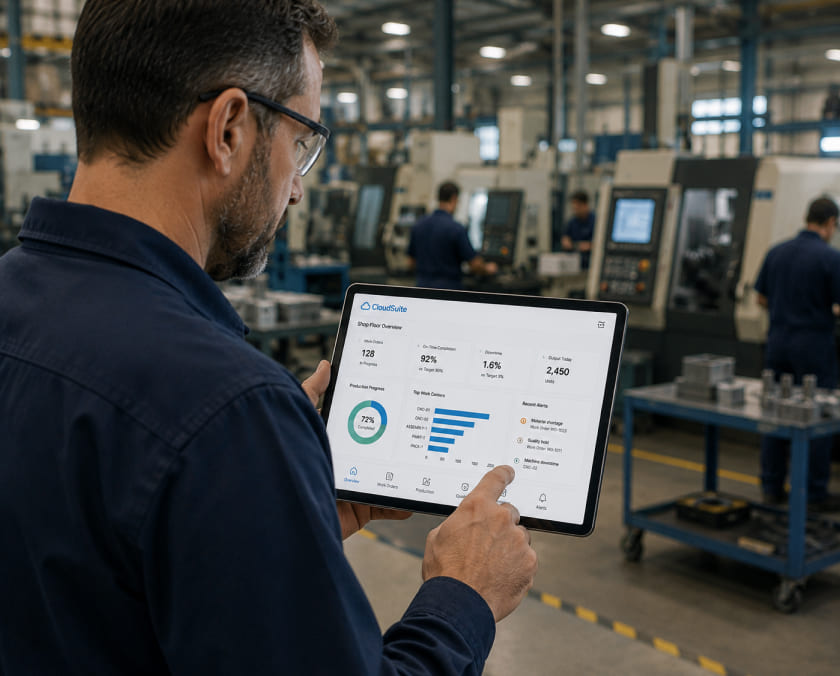
Epicor Kinetic includes real MES and shop floor integration most ERPs treat as an afterthought. Most implementations configure the financial and inventory side correctly and never connect the production floor.
Companies choose Epicor Kinetic because they need genuine manufacturing execution depth, shop floor data collection, advanced scheduling, configure-to-order logic, that generic ERPs handle poorly. That capability is real and well-built. What most implementations miss is actually connecting it to the physical production floor, leaving Kinetic running as a well-configured back-office system disconnected from the operation it was chosen to run. Dotlogics configures Kinetic to actually reach the shop floor.


of ERP implementations do not deliver the expected results. Not because of the platform. Because the system was configured around defaults instead of how the business actually operates.
Gartner ERP Research
Epicor Kinetic implementations that never connect shop floor data collection lose the manufacturing execution depth that was the actual reason for choosing a manufacturing-specific ERP.
Epicor Kinetic's built-in MES, advanced scheduling, and configure-to-order logic are genuine differentiators for discrete and mixed-mode manufacturers. Companies choose Kinetic specifically for this depth. The gap shows up in three consistent patterns.
Dotlogics starts every Epicor Kinetic engagement by confirming the specific manufacturing complexity, then configures the shop floor integration and scheduling logic that actually matches it.
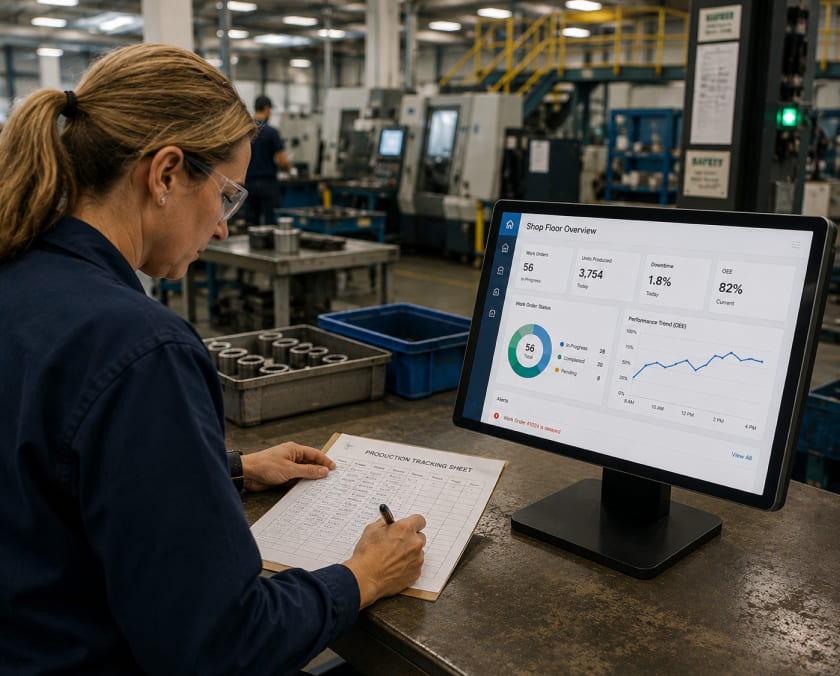
Every Epicor Kinetic engagement starts with the shop floor complexity the platform was chosen to handle.
Full implementation with shop floor and MES integration configured from day one, not added as an afterthought.
Auditing an existing Kinetic instance running financials and inventory correctly but disconnected from actual production data.
Building the product configurator and routing logic for complex manufacturing that generic ERP configuration cannot handle.
Connecting Kinetic to CRM, ecommerce, and production equipment through native APIs or custom integration.
Results
ERP and Systems Integration
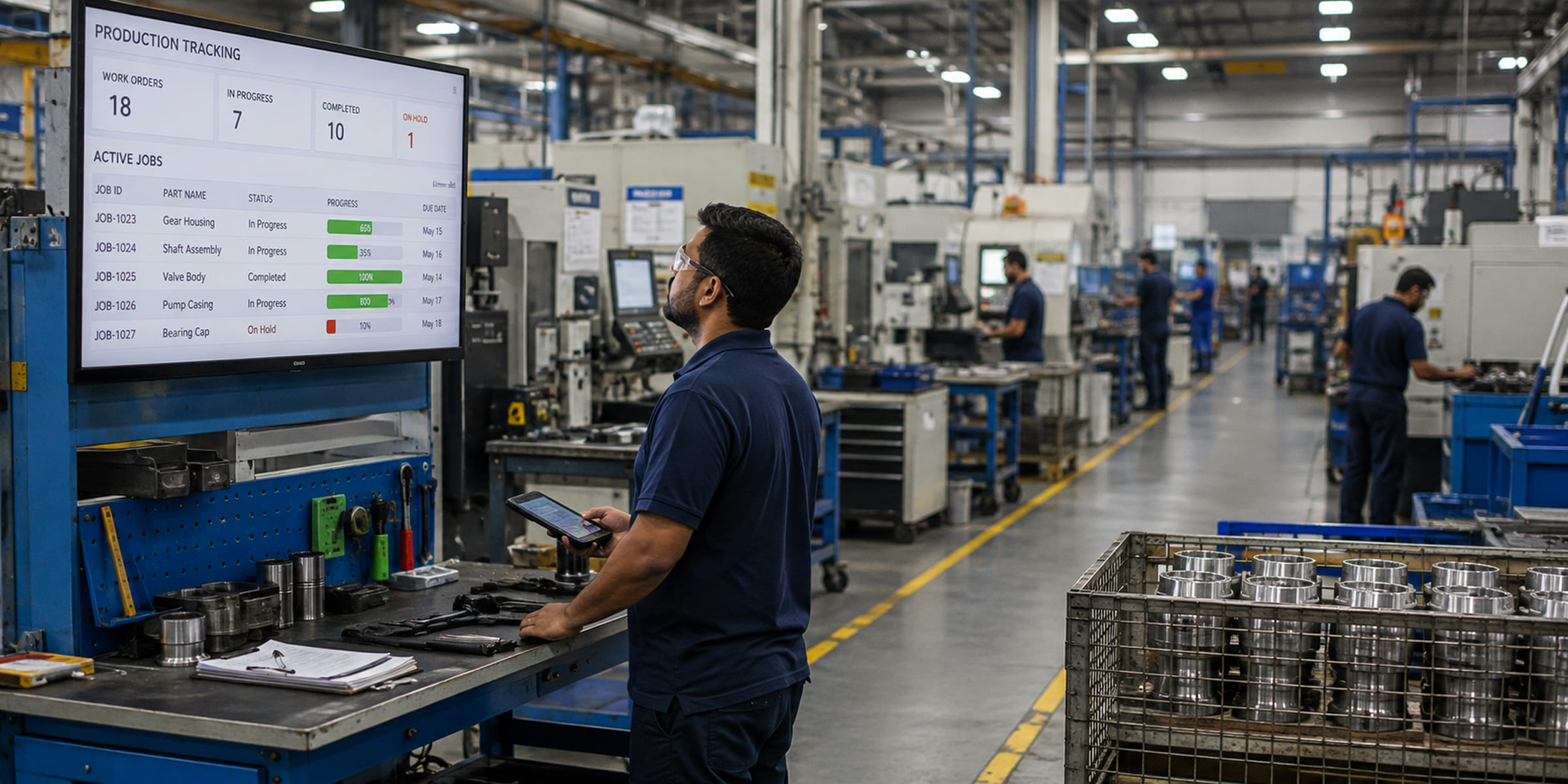
A manufacturer running Epicor Kinetic had financials and job tracking configured correctly, but production data was still recorded on paper and entered manually at shift end. After connecting shop floor data collection directly into Kinetic, reconciliation dropped from two full days to under two hours weekly and order processing capacity increased by 60% without adding headcount.
Common, and it defeats much of the reason Kinetic was chosen. The built-in MES and shop floor data collection are real capabilities most implementations never fully connect. An audit typically finds this can be configured without a platform change.
Cloud subscriptions typically run $80 to $250 per user per month plus a base platform fee, commonly $4,000 to $20,000 per month all-in for manufacturers. Implementation typically costs $100,000 to $400,000, with complex multi-site deployments reaching higher.
Kinetic has deeper native manufacturing execution capability, built-in MES, advanced scheduling, configure-to-order support, that Odoo does not match out of the box. Odoo Manufacturing covers straightforward production well at significantly lower cost. Kinetic makes more sense when manufacturing complexity genuinely requires that depth.
Yes, this is one of its core strengths, but configuring the product configurator and routing logic correctly for complex engineer-to-order workflows requires real manufacturing process expertise during implementation, not just platform configuration.
Kinetic has fewer implementation partners than Dynamics 365 or NetSuite, and manufacturing-specific depth varies across that smaller pool. Verifying real shop floor and MES implementation experience matters more here than platform certification alone.
Typically six to eighteen months depending on manufacturing complexity, number of sites, and whether configure-to-order or engineer-to-order workflows are involved.
Yes. Kinetic includes native MES data exchange capability designed for this, though older equipment may require a middleware layer depending on the protocols it supports.
Often, yes. Simple bills of materials and basic scheduling can be handled by Dynamics 365 Business Central or Odoo Manufacturing at lower cost and complexity. Kinetic's depth is most valuable when production genuinely requires it.
Yes. Kinetic supports cloud, on-premise, and hybrid deployment, with both subscription and perpetual licensing options, giving manufacturers flexibility in how they deploy and pay for the system.
Epicor Kinetic was selected for manufacturing execution capability generic ERPs cannot match. The engagement makes sure that capability actually reaches the production floor, not just the back office.