

Our Services
All the solutions you need to accelerate growth and drive business success.
All the solutions you need to accelerate growth and drive business success.
Contentful Services
Contentful is one of the strongest headless CMS platforms available. Organizations that get the most from it designed their content model around how their team actually creates and publishes content, not around what Contentful's default setup suggests.
Contentful is the headless CMS digital teams choose when they need structured content that feeds multiple channels, apps, and markets from a single source. The implementation that unlocks this is not a Contentful configuration project. It is a content modeling project that uses Contentful as the platform. The difference is significant. Teams that start with the platform and work toward the content model end up with a system that is technically sound and editorially unworkable. Dotlogics starts with the content model and builds the implementation around it.


Of software features are rarely or never used.
Standish Group Research
Contentful implementations without a deliberate content model leave much of that as content that has to be rebuilt by hand for every new channel.
Contentful's flexibility is its defining feature and its most common implementation failure. The gap shows up in three consistent patterns.
Dotlogics designs the content model before any configuration begins.
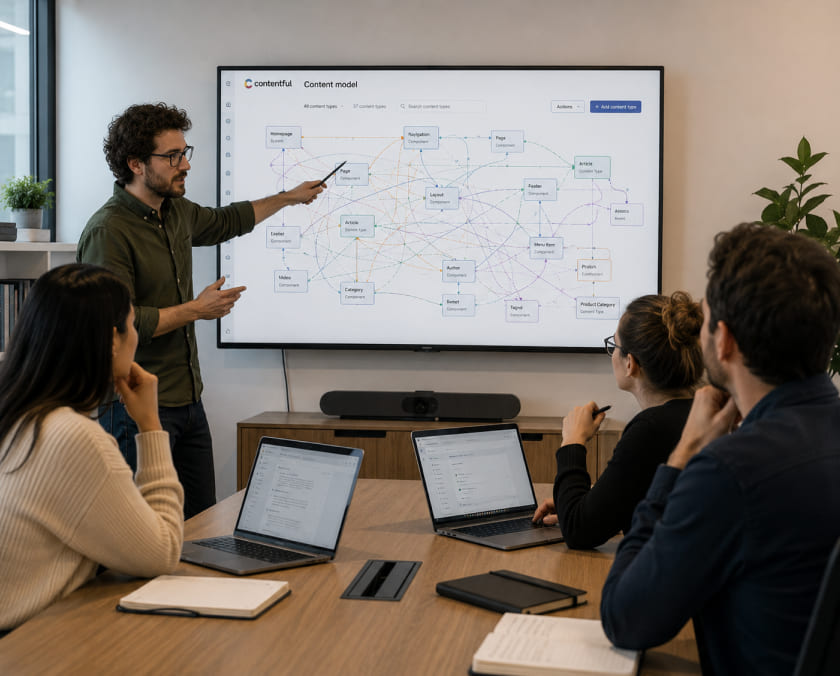
Every Contentful engagement starts with content modeling. No platform configuration begins until the content architecture is designed and validated.
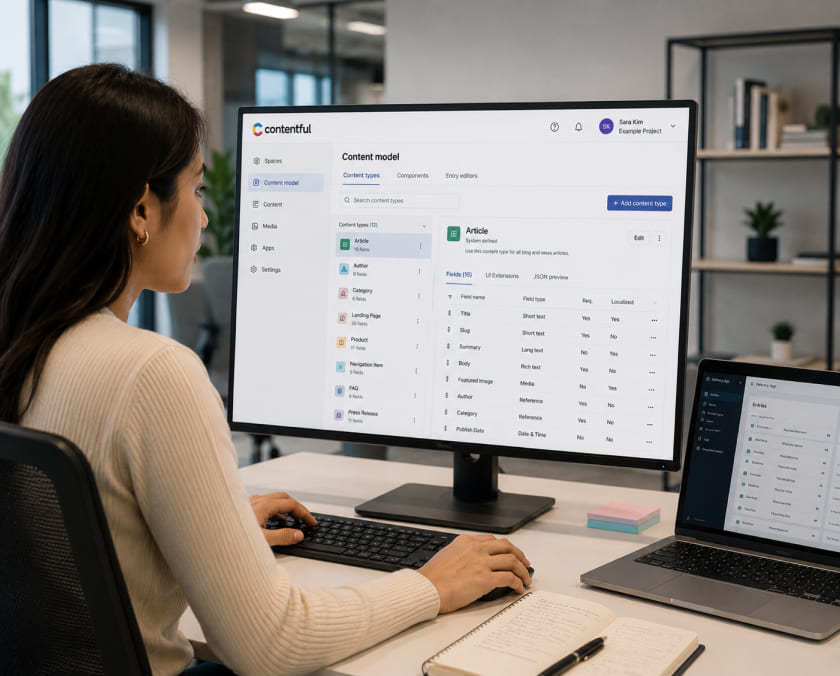
Designing the content types, fields, and relationships that will structure everything in the Contentful space. Built around how content is created, how it will be reused across surfaces, and how it needs to be localized.
Building the Contentful space, configuring the content types and fields defined in the content model, and connecting Contentful to the front-end delivery layer and any back-end systems that need to contribute or consume content.
Moving content from a legacy CMS, WordPress installation, or spreadsheet-based content system to Contentful. Content is migrated into the new content model structure, not imported as unstructured text.
Connecting Contentful to the systems that need to interact with content: ecommerce platforms, marketing automation tools, analytics platforms, and personalization engines. Content flowing from Contentful to every channel the business uses.
Contentful is the right choice when the business needs structured content delivered to multiple channels from a single source. A website, a mobile app, a digital display, and a third-party marketplace all pulling from the same content model without duplicating content entry. It is also the right choice for organizations managing content across multiple markets and languages, where a single content model with localization fields is significantly more efficient than separate CMS installations per market.
Contentful is not the right choice for organizations that primarily need a traditional web CMS where content editors work in a visual page-building environment. Contentful's structured content approach requires editorial teams to think in terms of content types and fields rather than pages and layouts. Teams that are not comfortable with this model will find traditional CMS platforms like WordPress or Sitecore's Page Builder more appropriate for their workflows.
Results
Digital Experience
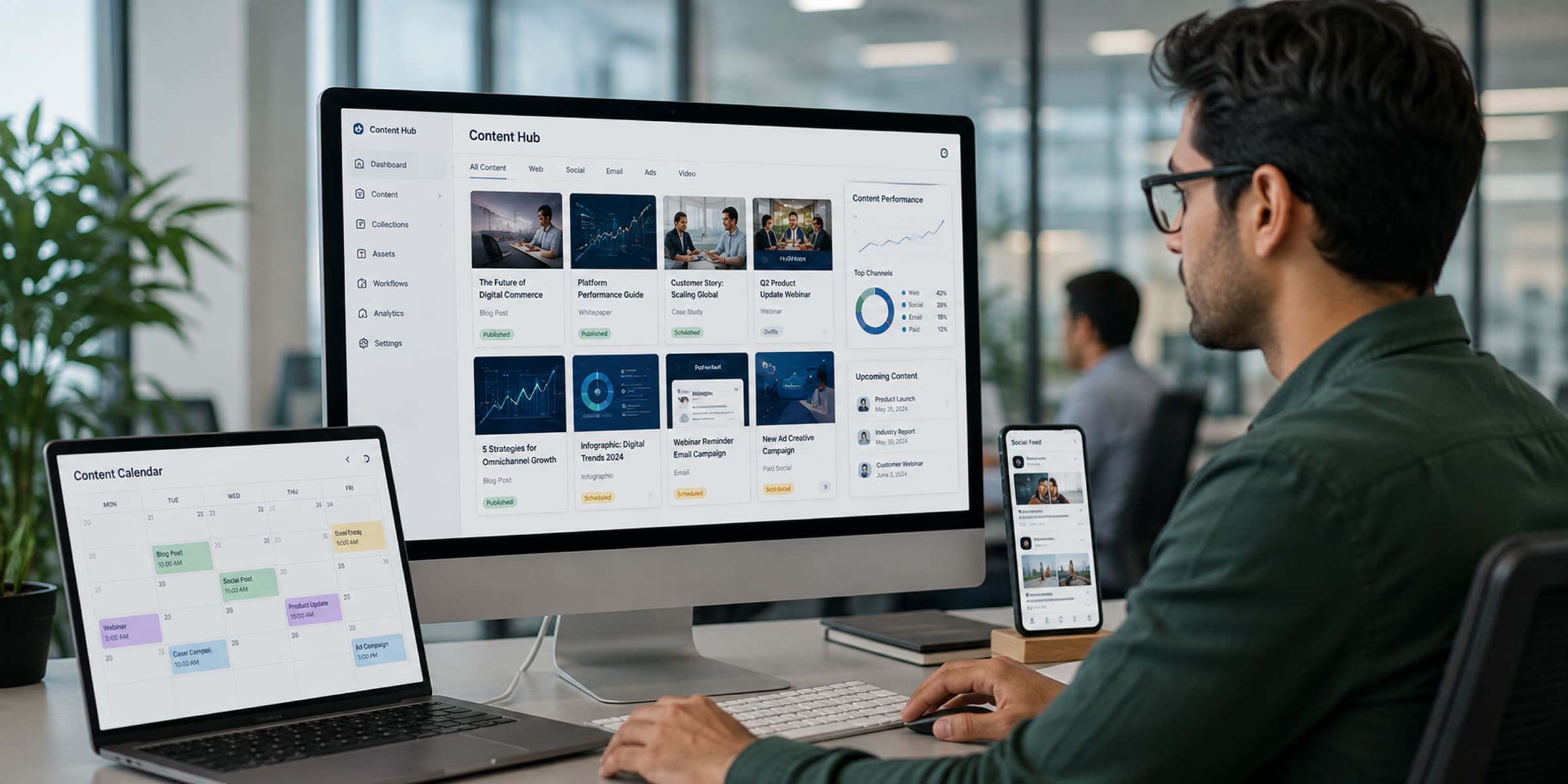
A global technology brand was managing website content, mobile app content, and partner portal content in three separate systems with three separate editorial teams duplicating content entry across all three. After implementing Contentful with a content model designed for multi-channel delivery, all three channels pull from the same Contentful space. A single content entry is published to all three surfaces simultaneously. Content entry effort dropped by approximately 60% and content consistency across channels improved significantly.
WordPress is a traditional CMS where content is created and managed in the context of specific pages and layouts. Contentful is a headless CMS where content is created as structured data, independent of how it will be displayed. Contentful content can be delivered to a website, a mobile app, a digital display, or any other channel through an API. WordPress content is primarily designed for web delivery. The choice depends on whether the business needs content delivered to multiple channels from a single source.
Moving from WordPress to Contentful makes sense when the business needs to deliver content to multiple channels beyond the website, is managing content for multiple markets or languages, or needs a more structured content model that supports content reuse at scale. It does not make sense when the team primarily needs a web CMS with a visual page-building interface. The migration requires significant content modeling work and editorial team adjustment. Dotlogics evaluates both before recommending the move.
A Contentful implementation for a single channel with a straightforward content model typically takes six to ten weeks from content modeling through launch. Multi-channel implementations with complex content models and migrations from a legacy CMS typically take twelve to twenty weeks. The content modeling phase is the most time-intensive part and cannot be rushed without producing a content architecture that needs to be rebuilt.
Contentful pricing starts at free for small teams on the Community plan. The Basic plan starts at $300 per month. The Scale plan, which is appropriate for most organizations with real content operations, starts at approximately $1,000 per month. Enterprise pricing is negotiated based on usage. Implementation costs add $25,000 to $150,000 depending on the complexity of the content model, the number of integrations, and whether content migration is required.
Yes. Contentful has strong native localization capabilities. Content types can have locale-specific fields that allow editors to maintain translated versions of content within the same entry rather than creating separate entries per language. For organizations managing content across multiple markets, this is one of Contentful's primary advantages over traditional CMS platforms.
The most common cause is a content model that was designed for technical convenience rather than editorial workflow. Content types with too many fields, unclear field labels, or relationships between content types that editorial team members do not understand make Contentful harder to use than it should be. Rebuilding the content model with editorial workflow in mind usually resolves this without a full reimplementation.
Contentful connects to ecommerce platforms through APIs. Product content managed in Contentful can be delivered to a Shopify, Magento, or BigCommerce storefront. Order and customer data from the ecommerce platform can inform content personalization in Contentful. The integration is custom-built based on the specific platforms and the content flows the business needs.
Yes. Contentful is commonly used as the content layer in headless ecommerce architectures where Contentful manages editorial content and an ecommerce platform manages the product catalog and transaction layer. A custom front-end pulls from both through APIs. This approach gives the most flexibility in how the customer experience is built but adds significant development complexity. Dotlogics evaluates whether headless is genuinely necessary before recommending it.
Contentful does not have built-in SEO and AI SEO tooling the way traditional CMS platforms do. Meta titles, descriptions, canonical tags, and structured data are managed through the content model and delivered through the front-end framework. Dotlogics builds SEO and AI SEO fields into the content model from the start so editorial teams can manage all SEO and AI SEO metadata through the same Contentful interface they use for all other content.
The organizations that get the most from Contentful designed the content model before the implementation. Content that can be reused across channels without reformatting. Editorial workflows that do not require developer involvement for routine publishing. Localization fields built in from the start. That is what the engagement delivers.