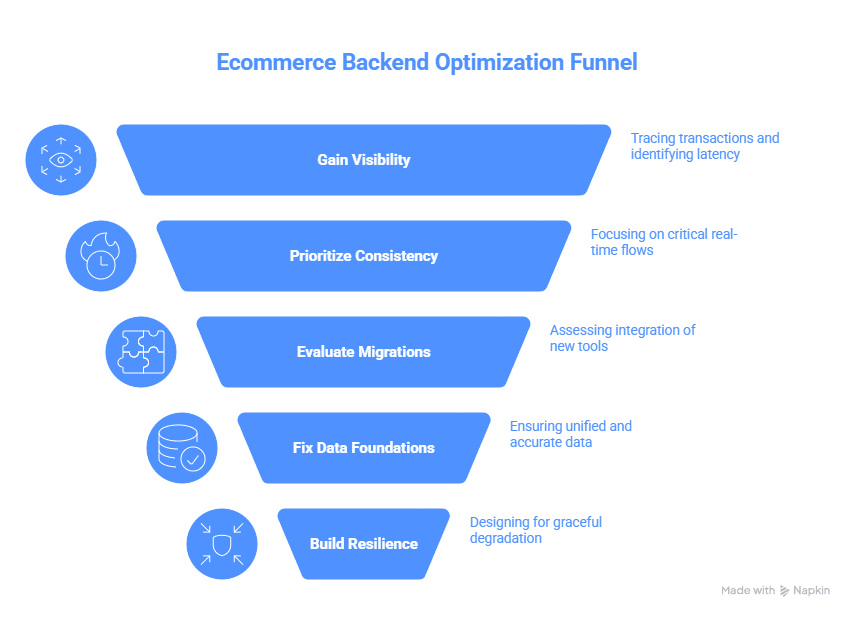
You don't need to rebuild everything from scratch. You need to identify where system constraints are limiting business outcomes, then address those constraints in order of impact.
1. Start with Visibility
If you can't trace a transaction end-to-end, you're operating blind.
What visibility looks like:
-
Frontend click
-
Payment confirmation
-
Warehouse fulfillment
-
Every system handoff
-
Every latency spike
-
Every retry
Observability isn't a nice-to-have feature. It's how you diagnose whether slow checkout is a frontend problem, a network problem, or a backend integration problem.
2. Prioritize Real-Time Consistency Strategically
Not everything needs to be real-time, but the high impact touchpoints do.
Where real-time matters most:
Flash Sales and High Traffic Events
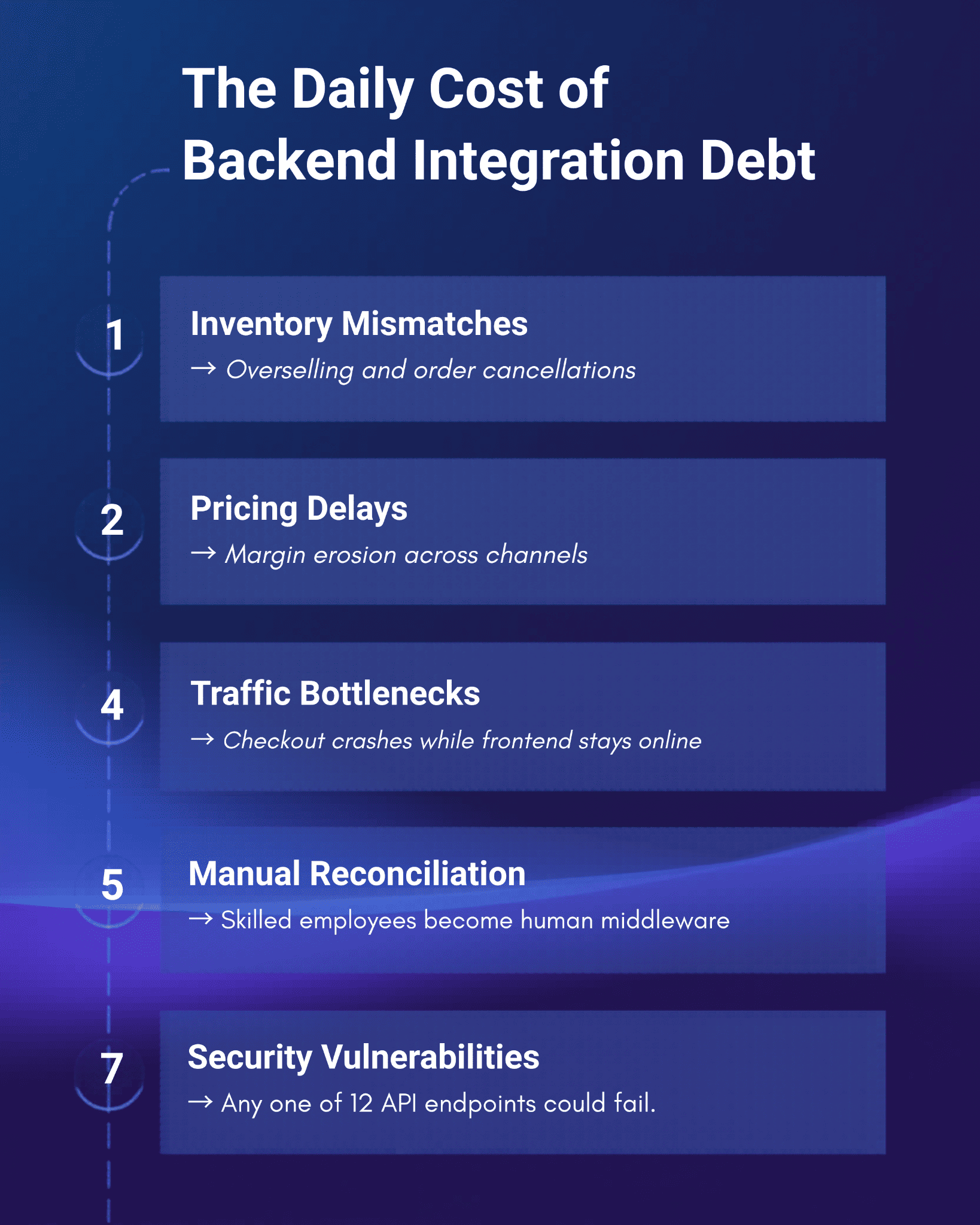
Inventory accuracy is critical when you're moving hundreds of units per minute. Batch updates will cost you in oversells and cancellations.
Cross-Channel Pricing
Pricing consistency matters most where customers actively compare. If your mobile app shows one price and your website shows another, customers notice.
Checkout Flows
Payment processing, fraud checks, and order confirmation need immediate system responses.
Focus your real-time investment where it directly impacts customer experience and revenue outcomes.
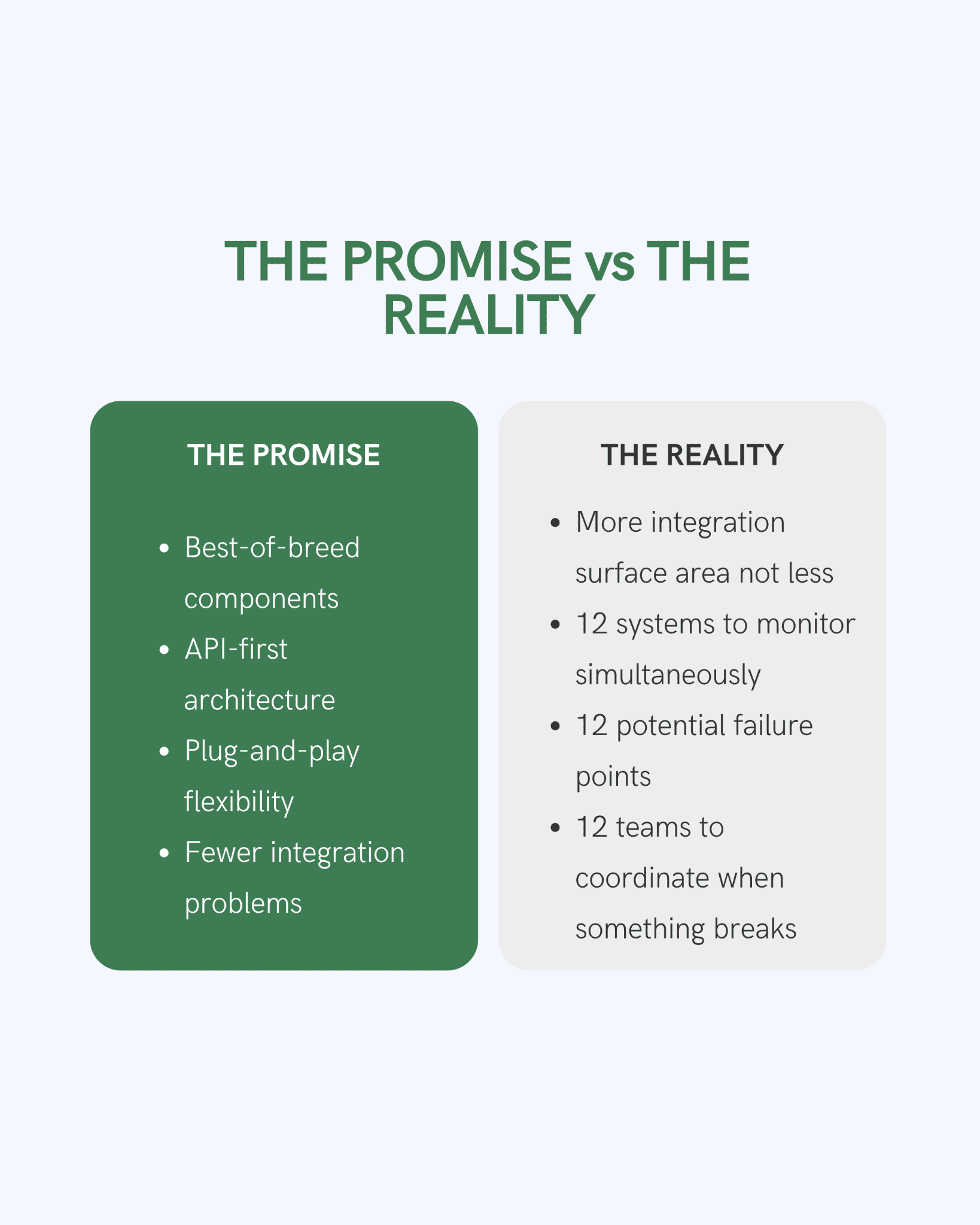
3. Evaluate Composable Migrations on Integration Maturity
A new service is only as good as its ability to reliably communicate with your existing systems.
When evaluating new tools, ask:
-
How does it integrate with our current order management system?
-
What happens when the integration fails?
-
Can it handle our peak traffic volumes?
-
Does it support our data governance requirements?
If the integration layer isn't production ready, the migration creates more risk than value.
4. Fix Data Foundations Before AI Initiatives
AI is only as good as the data you give it.
If you're investing in personalization or recommendation engines, first ensure:
-
Product catalog has no duplicate records
-
Categorization is consistent across systems
-
Attribute updates happen in real time
-
Customer data is unified and accurate
AI accelerates failure when the underlying data is unreliable. It will confidently recommend products that don't exist, suggest prices that aren't current, and target customers based on incomplete profiles.
5. Build Failure Resilience Into Critical Workflows
Design for graceful degradation, not perfect uptime.
Practical examples:
Shipping Rate APIs
If a third party shipping rate API goes down, your checkout shouldn't crash. Fall back to estimated rates and complete the transaction. You can reconcile the actual shipping cost later.
Fraud Detection Services
If your fraud detection service times out, have a decision tree:
-
Approve low risk transactions automatically
-
Flag high risk ones for manual review
-
Don't block everyone while waiting for a service to respond
Payment Processors
Have backup payment processors configured and ready to activate if your primary goes down.
|
Perfect uptime doesn't exist. What exists is systems that handle failure well and systems that don't.
|