

Our Services
All the solutions you need to accelerate growth and drive business success.
All the solutions you need to accelerate growth and drive business success.
ERP for Professional Services
Professional services firms run on time, billing, and client relationships. An ERP that cannot connect these three things is just an accounting system with extra steps.
Dotlogics configures ERP systems around the specific financial model of professional services: time as the primary input, billing as the primary output, and client profitability as the measure of success.


Where Professional Services ERP Goes Wrong
Regardless of platform, these are the issues that come up most often when professional services firms are not getting full value from their ERP.
When consultants track time in one system and billing is generated in another, every invoice requires manual reconciliation. Billable hours get lost. Write-offs happen that should not. The billing team spends the last week of every month fixing what the disconnect created.
When resource costs and billing data are not in the same system, profitability can only be assessed at project close. By then, the engagement that was supposed to be the most profitable of the quarter has become the most expensive to deliver.
Staffing decisions made without visibility into current billable capacity, forward commitments, and skill availability result in the two problems that hurt professional services most: overworked teams and underused capacity running side by side.
Fixed fee, time and materials, retainer, milestone billing. Most professional services firms use all four across different clients. An ERP that can only handle one billing model cleanly requires manual workarounds for every variation.
Platform Options
We are neutral advisors. We do not earn more when you choose one platform over another. The right platform depends on your billing complexity, your resource management needs, and your existing technology stack.








How We Help
Every engagement starts with how time, billing, and client relationships actually flow through the firm, before anyone touches the system.
Connecting time entry directly to project billing so that every billable hour flows to an invoice without manual reconciliation. Write-offs are tracked by exception, not discovered at billing time.
Configuring the ERP so that project managers and finance can see real-time profitability on every active engagement, not just at project close.
Building resource planning into the ERP so that staffing decisions are made with full visibility into current utilization, forward commitments, and available capacity.
Connecting client relationship data, engagement details, and financial performance in one system so leadership has a full picture of each client relationship without pulling from multiple sources.
Results
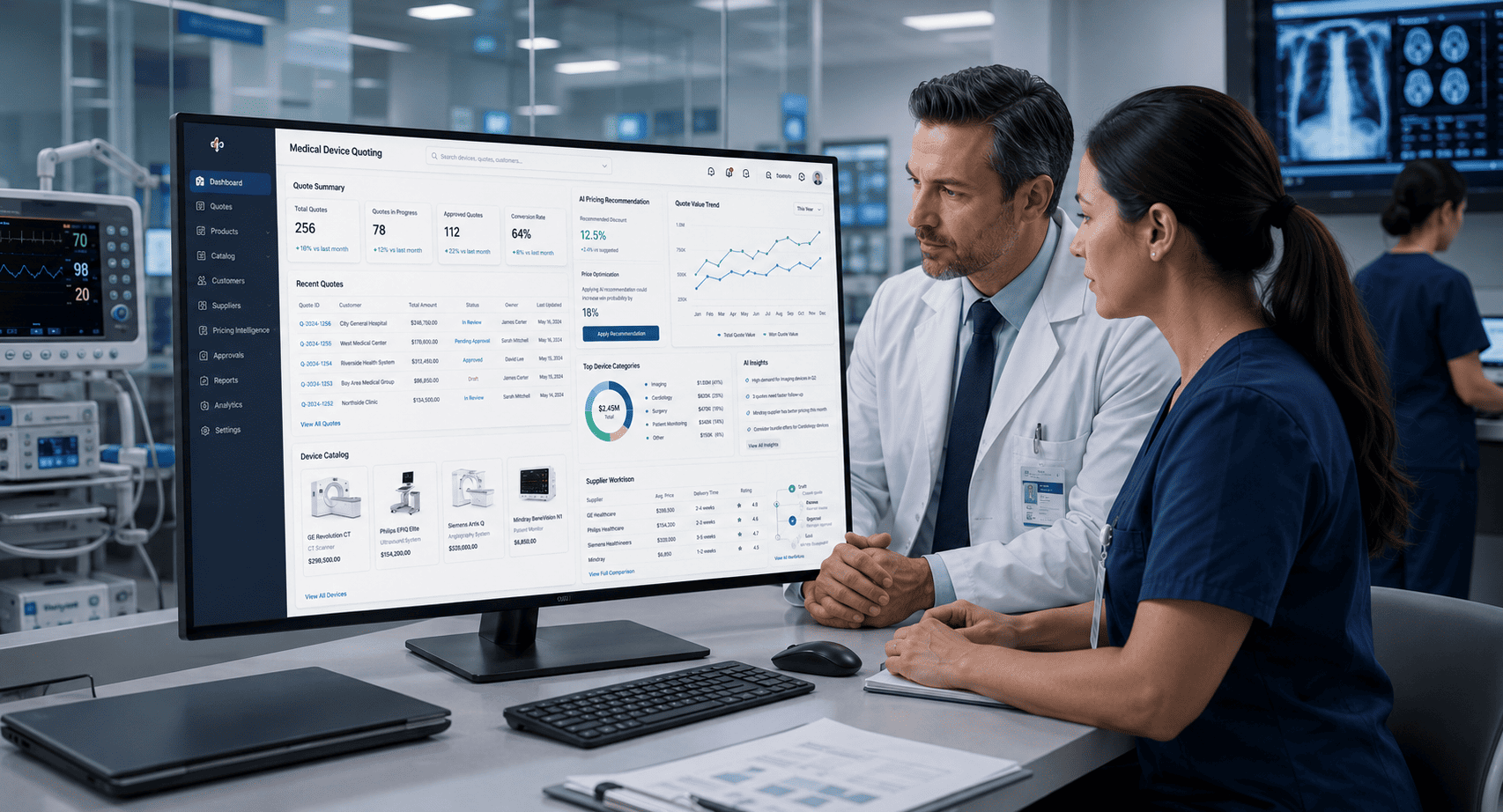
AI-Powered ERP Integration
A company managing quotes manually across sales, finance, and operations had no connection between the quoting process and their financial system, a pattern that shows up the same way in professional services firms managing proposals and engagement scoping across disconnected tools. After building an AI-powered quoting engine integrated directly with the ERP, quote turnaround dropped to under 30 minutes and the team recovered 12 hours per week previously spent on manual coordination.
Common Questions
Professional services firms commonly use fixed fee, time and materials, capped time and materials, retainer, and milestone billing across different clients. All of these are configurable in Microsoft Dynamics 365 and NetSuite. A generic implementation that does not account for billing model variation is the source of the problem, not the platform.
Time tracking adoption is a design problem. When the time entry interface is fast, simple, and accessible from mobile, adoption is high. When it requires navigating complex screens to log 15 minutes of work, adoption fails.
Professional services firms need an ERP when the current combination of tools creates more reconciliation work than it saves. The typical trigger is when the time tracking system, billing system, and financial system are all separate and the connections between them consume significant staff time every month./p>
For firms needing strong project accounting and Microsoft integration, Dynamics 365 Business Central with Project Operations is the strongest option. For firms growing rapidly or managing multiple entities, NetSuite handles multi-entity financial consolidation better. For smaller consulting firms, Odoo provides core time tracking, project billing, and financial management at the lowest cost.
An ERP system helps consulting firms and agencies by connecting time tracking, project billing, resource management, and financial reporting in one system. The primary benefit is eliminating the manual reconciliation between time entry, invoicing, and the general ledger.
Professional services firms need time tracking connected directly to project billing, support for multiple billing models, real-time project profitability reporting, resource utilization tracking, revenue recognition configured for services billing, and client-level financial history.
A professional services firm typically needs an ERP when the combination of time tracking, billing, and financial management tools requires significant manual reconciliation to produce accurate financial reports. Common triggers include multiple billing models across clients and three or more disconnected systems that need to reconcile monthly.
A professional services ERP implementation typically takes three to seven months depending on the number of billing models in use, the complexity of resource management needs, and the number of practices or entities involved.
Yes, this is a standard requirement for firms with international clients. NetSuite has the strongest native multi-currency support of the platforms discussed here, though Dynamics 365 and Odoo also handle it with proper configuration during setup.
Professional services firms that run their ERP correctly know exactly where every hour went and what it returned. Utilization by person. Profitability by client. Billing by engagement. Available in real time, not assembled at month-end. That is what the configuration is built to deliver.